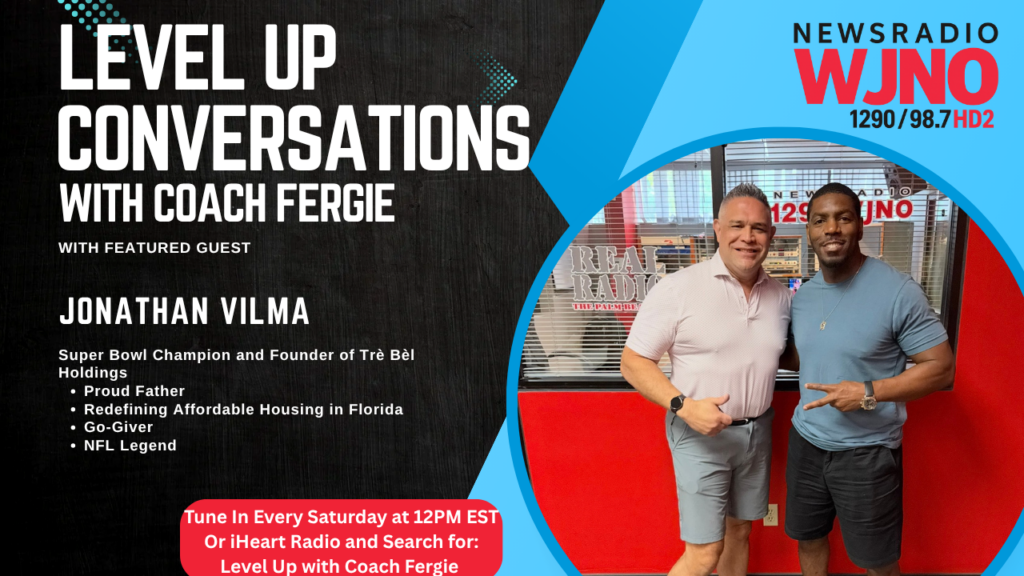
Jonathan Vilma||CEO founded Trè Bèl Holdings, a real estate company that owns and manages Multifamily properties throughout the Southeast. This venture followed his passive investment in over 700 multifamily property units during his decade-long football career with the New York Jets and New Orleans Saints. Trè Bèl Housing focuses on Workforce Housing through acquisitions of value-add apartments and engaging in ground-up development. Since 2018, Trè Bèl Housing has acquired 5 properties. Trè Bèl is the majority owner and outsources the management to 3rd party property managers. The current average occupancy across all properties is more than 97 percent occupied. The success of the business has been due to the policies developed and implemented by Jonathan Vilma. In 2020, building on Trè Bèl Housing’s success, Jonathan Vilma entered into a Private Public Partnership (P3) with the Miami-Dade Public Housing and Community Development (PHCD) to redevelop their existing public housing land into 161 Affordable Housing units. Other current P3 development projects include; a mixed use / mixed income project containing 149 units of workforce housing in West Palm Beach, FL and a mixed income development containing 298 units in Coconut Grove, FL.
Coach fERGIE’S tOP 5+ Knowledge Nuggets and Take-Aways
- Affordable housing today is not for the “stereotype”—it’s for teachers, nurses, police officers, and first responders 🏡
- The real housing crisis shows up in behavior—long commutes, multiple jobs, and survival mode 🚗
- Changing perception starts visually—high-quality design eliminates stigma around affordable housing 🎨
- The American Dream has shifted—middle-income families now need support just to live where they work ⚒
- Teamwork from football translates directly to business—different people, same mission, aligned execution 🏈
- The biggest barrier isn’t resistance—it’s lack of knowledge on how to move projects forward 🛑
Recommended Resources – Hover and Click
🔥Show Sponsor Steve Austin’s Dynamic Team with Rize Mortgage
Please Consider Supporting the 988 Suicide and Crisis Hotline
- 🔹Valuable Time-Stamps 🔹
- 🕒 00:02:15 – Competitive edge in development
- 🕒 00:03:45 – Redefining affordable housing today
- 🕒 00:05:30 – Real impact of housing crisis
- 🕒 00:08:20 – Breaking stigma through design
- 🕒 00:14:10 – Building partnerships that scale
Artwork by Dylan Allen
Videography by Aubrey Aerials Marketing, LLC
Speech Transcript
Brian Mudd: [00:00:00] Are you ready to level up? Do you wish to live a life of options and not obligations? You’ve come to the right place? Thank you for stopping on by to hear knowledge nuggets from Coach Fergie and his top tier guest to help you lean into your ultimate human potential. Now let’s level up with Coach Fergie.
Coach Fergie: Hey, varsity Squad. Welcome back to another powerful edition of Level Up Conversations with Coach Fergie. With Time to Shine Today Coaching. I’m your host, Scott Ferguson. Blessed to be. You’re a gap coach, specialize in performance, mental conditioning, working with business leaders, entrepreneurs, entertainers, athletes, C-Suite, and students to help them bridge their success gap, deliver life of options and not obligations. <<READ MORE>>
Coach Fergie: Hey, varsity Squad. Welcome back to another powerful edition of Level Up Conversations with Coach Fergie. With Time to Shine Today Coaching. I’m your host, Scott Ferguson. Blessed to be. You’re a gap coach, specialize in performance, mental conditioning, working with business leaders, entrepreneurs, entertainers, athletes, C-Suite, and students to help them bridge their success gap, deliver life of options and not obligations. <<READ MORE>>
And this platform, we’re stoked to bring you high performers who are not just chasing entertaining success, but defining it through providing above and beyond service. Real quick squad by coaching knowledge Nugget of the week is, legacy isn’t what you earn, it’s what you build for others. I’m blessed to coach a real estate investor right now, sharp, making money, stacking deals.
But at one point he hit a wall because every movie he was making was about him. More doors, more income, more status, and it [00:01:00] started to feel empty. So I asked him, if everything you’re building disappeared tomorrow, who would actually care that one landed? That’s where he shifted, not his skillset has standard from at accumulation to impact from chasing the building, something that lasts and everything changed.
His energy got sharper, his decisions got cleaner and his execution got faster. ’cause when it’s not about you, you stop negotiating. Anyone can make money. Not everyone builds something that matters. So squat, if you feel stuck, stop asking what you can earn. Start asking what you’re building. That outlives you guy like to say, plant trees, that no one’s gonna sit in the shade of him.
My guess, and I’m coming, bringing on here right now, he’s planting those trees that no one’s gonna sit in the shade of. He’s a Super Bowl champion, a field general, a tone center. But what he’s doing now, this might be his most important work. Yet today’s guest is Jonathan Velma, former NFL Linebacker with a New York Jets and Super Bowl champion with the New Orleans Saints and a three-time pro bowler who’s now attacking one of the biggest issues here in right here in South Florida.
Affordable housing as CEO of Tre Bell Holdings, which is very beautiful in Haitian, which did that translation in my Google last night or chat one of the two. But he’s not just investing, he’s [00:02:00] building real solutions in Palm Beach County for low income and workforce families. We’re talking ground up, affordable housing in West Palm Beach.
Programs designed for families earning below the median income, turning underused land into real opportunity and building communities where people can actually live, not just survive. This isn’t talk, this is development. This is impact. He’s forging a pipeline of housing that gives. A shot at stability in a market that’s pushing them out.
That’s legacy. That’s that Tree Squad. Jonathan, thank you so much for coming on, brother. No, thanks for having me. This is a blessing. Yeah. No, but be honest. Do you get the same adrenaline closing on a deal, helping these people Yeah. As you did before, big game kickoff?
Jonathan Vilma: No, I don’t. No I will say the adrenaline comes from finding a deal.
Going up against, ’cause we’re always gonna need, you’re some sort of gap funding, right? Yes. So going up against other developers and finding that competitive advantage. That’s been the whole shtick Right? To Rebell housing. It’s I’m gonna go in, you’re competing against seasoned veterans and some of the bigger names out there.
How do I create the [00:03:00] advantage? How do I get the dollars that are needed? To create the affordable housing. That’s where it, it gives me a rush. I like that,
Coach Fergie: That, that’s amazing. ’cause you’ve got a lot of political red tape, especially when you get in here into Palm Beach County. Yeah. Because you know the other side of this island and stuff like that.
And you get, oh, I
Jonathan Vilma: know the history. A lot of stuff. I know the history. Yeah.
Coach Fergie: But you’re creating developments for people who are earning below the median income.
Jonathan Vilma: Yes.
Coach Fergie: So what does that actually look like in real terms? For a family trained, to live in West Palm Beach should,
Jonathan Vilma: so in real terms, I think about the family that has a police officer for a husband, a nurse for a wife, three kids, and.
30 years ago, it was very easy to make a real living and not just a living of, okay, you pay the bills and everything is done right. It’s, you actually would pay your bills. You had money left over, you could save that money. You could send your kids to college. That was the American dream. So I’m looking at the, affordable, 60% [00:04:00] a MI area meeting income as now the benchmark for this living, that American dream.
And when I think about affordable housing, it’s changed so much from 20 years ago, 30 years ago to now where there was a stigma that affordable housing. You know the employee at McDonald’s, right?
That was the affordable housing person and they had no, no dreams, no desires, no ambitions. And they were just sucking money out of the government. That’s the stigma. And now when you look at it, you say the area median income, that income, that salary is a police officer. It’s the nurse, it’s the firefighters, right?
The
Coach Fergie: heroes.
Jonathan Vilma: It’s the first respondents, right? The teachers. So these people are, or this I don’t wanna say these people like this demographic. I
Coach Fergie: gotcha.
Jonathan Vilma: They are, they have been quietly saying it for the longest, but they work their butts off all the time that they need help.
And. It shows up when they have to work two jobs. It shows up when they have to move outside 30 minutes an hour. Outside [00:05:00] of where they actually come into work. That’s how they’re telling you they need help. Because the community is supposed to be the haves, the have nots, everybody living together.
And enjoying the fruits of
Coach Fergie: that community. It’s a cating pushed out so much. That’s
Jonathan Vilma: correct.
Coach Fergie: Like even if you go to restaurants in Palm Beach. I’ve noticed the service is not even close to what you get. ’cause a lot of the servers and stuff like that do it for a living, have to move to Martin County.
Jonathan Vilma: That’s right.
Coach Fergie: They don’t care or don’t pay Broward. So you get these people in here that just don’t care. So that’s, the service to me is huge.
Jonathan Vilma: Yeah. And I’m, I, that’s where I first noticed it based in Miami. I noticed in, I live in Coconut Grove.
And you had managers, forget the service for a second.
The managers who make 75, $80,000, what
Coach Fergie: they can’t even,
Jonathan Vilma: They can’t even live in Coconut Grove. They’re coming an hour away from either Yes. South Homestead or North and Broward. So what, first of all, what’s on their mind, right? They had to wake up early. Traveling traffic had to drop their kids off, right?
And then go to work. Then they’re thinking about having to go sit in an hour’s worth of traffic, go pick up their kids, right? They can’t enjoy anything at all. And so when they’re at work, how [00:06:00] are they ever going to be, to your point, right? Servicing the individuals, right? Their mind is somewhere else and forget the whole thing.
Survival. That’s it. That’s it, right? And forget the whole community engagement. They don’t live in the community, so they don’t care. They’re just getting a check and just going paycheck to paycheck, trying to survive. That’s not the way people should live.
Coach Fergie: No. And so you’ve partnered with, public en entity, I’m almost said public enemies, but public entities in communities.
They can be sometimes. I bet. They make these, you partner with people with your partner Danny. Me. Moritz. Moritz, yeah. And so you brought some New York flavor down here to help you with a little muscle. I see. You partner with these entities and to make these projects happen.
So what are the biggest obstacles you’re seeing that slow down, affordable housing from getting built? What kind of red tape? Can the people out there that’s listening, maybe you say, you know what, maybe we can help them.
Jonathan Vilma: I’ll first start with the good. The good is that everyone recognizes everyone.
I’m referring to government as well. Recognize that there is an affordable housing crisis. Yes, sir. And that when you come to the table [00:07:00] with a project that is seriously gonna service the 60% a MI below the affordable tenants. Everyone is all in favor and they want to figure out a way to get it done
Coach Fergie: right.
Jonathan Vilma: So that part has always been and not just Palm Beach County, they’ve done a great job, but Broward County, Miami-Dade as well, Lee County, out on the west coast of Florida. So I always go with the kind of the mindset that. They want it to happen.
It’s just a matter of educating them and figuring out a path to get it done.
Because when you’re government and I try to look at it from their side, that’s
Coach Fergie: great. Empathy’s huge. Absolutely.
Jonathan Vilma: You have to Right? Because they have so many other things that are going on or people coming to them with needs asked, wants, demands. That is outside of housing. So I can’t go in and just expect that they’re gonna know everything there is to know.
About affordable housing and why I am asking for some subsidy and why I’m asking for a density increase, et cetera, et cetera. I always take [00:08:00] the stance that they do want it to happen. It’s my job to educate them, help them through the process, game, plan it, game plan it, strategize on how we’re going to move this path forward.
Everything has always been I would say on the up and up the red tape. Doesn’t come from, not necessarily the NIMBYs. I haven’t really experienced that. Sure. To be honest, it really comes from the lack of knowledge on how to push.
Coach Fergie: Yeah. ’cause
Jonathan Vilma: push through.
Coach Fergie: There’s a stigma, right?
Yeah. Around affordable housing. If you’re listening out, there’s going, I’m putting quotes around that. Yeah. How are you? Changing that narrative. So these developments strengthen communities instead of them being resistant because,
Jonathan Vilma: yeah,
Coach Fergie: we’re all human. We’re like, whoa, affordable housing, like but again, they’re the people that are making 85, 90 Gs a year that just can’t really afford Ford to live here. But you’re giving them an opportunity to.
Jonathan Vilma: Yeah.
Coach Fergie: So how do we push back against that stigma or maybe have welcome it in and work with it?
Jonathan Vilma: So the first is I like to come with some sort of renderings, drawings.
People are visual creatures, so you want to show [00:09:00] them. Either past projects that I’ve done or what could be on the site that I’m looking to develop, and it’s always, it’s the same thing. They, first, they hear affordable housing, they’re like, eh, the stigma. Then they look at the apartments and they, or the renderings, they’re like.
Oh, that’s nice. That’s nice, right? Yeah. They’re like, oh, that doesn’t look like a afford. Exactly. It doesn’t look like a afford housing. That’s the whole point. We’ve evolved from back then when you just did the bare minimum, ugly concrete block, the smallest windows possible, et cetera, to now having really nice housing because when we going back to the community, we look at it as for the next 30 years, we’re in a marriage with this community.
Let’s, we’ll just say West Palm right now, if I build a piece of crap,
You’re always gonna remember Jonathan Vilma Tray Bill Housing was the one that built that ugly piece of crap right there on the block. And now it just, it ruins that community. So for the next 30 years until someone wants to knock it down or whatever.
[00:10:00] So the first thing I do is come in with either past projects that I’ve done or future projects.
Coach Fergie: Proofs in the pudding kind of thing.
Jonathan Vilma: Yeah. And then they can look at that. Then once you’ve disarmed them. You start to educate them on, as we just mentioned, who are we targeting,
Coach Fergie: right?
Jonathan Vilma: We’re not targeting McDonald’s employee. We’re now targeting the nurses, police officers, firefighters, et cetera, and teachers. And then they, it kind of clicks. It’s oh. We
Coach Fergie: want those people close.
Jonathan Vilma: We need those people close. Yeah. Those are the first. That’s true. Need it? We need those people close, right?
Imagine if right now you have a teacher shortage in Palm Beach County. Imagine if that shortage increased by 20%, 30%, all for the same reason that they can’t find a place to live. What happens? Okay, now everyone has to stop,
Coach Fergie: right?
Jonathan Vilma: It’s an immediate crisis. Sure. And we need teachers because the kids gotta go to school and learn, right?
So once we start to educate them on who we’re targeting, now it’s how can I help?
Oh, okay, I get it now how can I help? And then it’s, are you sure it’s gonna [00:11:00] look like what you’re showing?
A hundred percent because we don’t want to mess around with. Being that guy that tried to pull the rug
Coach Fergie: to somebody.
I love transparent. You’re being with that of course, you just open book and putting it out there and you’re aligning with the right people. We’ll talk a little bit about who you are aligning with as well in the area here right now. We’re going to throw it to our sponsor, Steve Austin, with Rise Mortgage.
We’re blessed to him. Come on. And share a little market update with us, Steve. Take it away.
Steve Austin (Rize Mortgage – Show Sponsor): Thanks, Scott. Happy Saturday everyone. This is Steve Austin with the Rise Mortgage Dynamic Team with your mortgage tip of the week. Don’t let the old mortgage industry myths be the reason you stay on the sidelines. One of the biggest ones is that you need 20% down to get in the game. Short answer, that’s fake news.
To learn about your actual down payment options, give us a call at (561) 250-6044. That’s 5 6 1 2 5 0 6 0 4 4. That’s it for this week. This is Steve Austin, your branch manager, NMLS 7 6 2 3 2 8. With the RISE mortgage [00:12:00] Dynamic team N MLS 1 6 0 4 6 6 3 in equal housing lender.
Joel Malkin: Are you looking to finance your dream home vacation getaway, or an investment property?
The Rise Mortgage Dynamic team and company is here to help Steve Austin and his team, they’re expert loan advisors, combine local knowledge with cutting edge technology to make your financing process efficient and seamless. Whether it’s your first home or your next investment, trust Steve Austin. And the Rise Mortgage Dynamic team and company to guide you every step of the way.
Visit them today and experience the perfect blend of technology and personal touch. Steve Austin’s Rise Mortgage Dynamic team. Your local experts in residential financing. Call Steve today at (561) 352-9278. That’s 5 6 1 3 5 2 9 2 7 8 5 6 1 3 5 2 9 2 7 8. And ML S number 1, [00:13:00] 6 0 4 6 6 3.
Coach Fergie: Hey Steve, thank you so much for the market update and I know that the market’s turned in a little bit. Steve and I are actually kinda working on a few things together, which is. Really livened it up. It we’re back with Jonathan vma, founder of Trey Bell Housing. Jonathan, you talked about aligning with the right people in the area.
Awesome. Kirsten Miller here, she’s the one that introduced you to me, but like her future mother-in-law is you’ve aligned with Suzanne Cabrera right here, and tell us what you’re doing with the people that you’re aligning with. How you, I’m not gonna say pitch it to ’em, but walking in so in case there’s anybody out there that’s listening squad that wants to hear about putting affordable housing, whether it’s anywhere here in Florida.
But especially here in Palm Beach, how, what’s your kind of like intro into that?
Jonathan Vilma: So it’s fortunately, going back to everyone wants to see affordable housing, everyone wants to help. I don’t have to do much of a pitch or a sale, right? So it’s really about just discussing the needs. And then I always like to ask, what are your [00:14:00] needs?
Yeah. I want to know, ’cause I live in Miami, right? So I know what Miami needs. It may be different right, than what West Palm needs or Palm Beach County or if I go out to Fort Myers. So I always want to understand the lay of the land of that area, that community. And then once I hear, hey, what are your needs?
99% of the time, it matches what we’re trying to do.
And so it’s an easy then segue, transition into. This is what we’re doing. This is how we do it. And just from, football playing days, I have no problems working with people. That’s the beauty of playing football and playing a team sport.
You, you understand how to work with others, right? And they don’t have to be like you. They just have to have the same goal. That’s it. We can have the same goal in mind and we work together and we get it done. So for myself and Trey be, we are always looking for not just obviously land to develop, but real partnerships.
We’re looking for the conversations with someone who may know someone who [00:15:00] may know someone that has land. I’m okay with that because. That, whether it happens or not, I know that we are aligned in what we’re trying to accomplish, right? So me having those relationships, it’s always good for that person and myself.
Where Suzanne, for example, she may run across a church that’s trying to figure out how to develop the land, right? She says, oh, we have someone, Jonathan, he’s done it with over on AVR Hill, he’s done it with a church group, and you’d be great for you guys to connect. Thank you. I appreciate it. And go from there.
So that’s really how those relationships start. They start from just, are we on the same page? Let’s start there. Service, we have the same goals. Yeah. Same service of the community. And then from there it goes.
Coach Fergie: Love it. And you’ve built systems that keep your properties 97 90 8% occupied, correct?
Jonathan Vilma: Yes.
Coach Fergie: What are you doing differently that other developers maybe aren’t? Because I know that you’re heart centered and your service centered, but is there anything like secret sauce that you’re keeping these that fill? I know the needs [00:16:00] there.
Jonathan Vilma: Yeah.
Coach Fergie: But they’re staying there in their pain, right?
Jonathan Vilma: Yeah. What
Coach Fergie: do you think you’re, what is
Jonathan Vilma: the
Coach Fergie: difference?
Jonathan Vilma: Good question. I wouldn’t say there’s a difference. I’d say there is a be we’re intentional. We’re intentional with our property management companies. To make sure that they understand the tenant that they’re dealing with. And for example, if I have a luxury market rate downtown West Palm,
And I have a property manager, someone misses rent. More than likely they could afford it. And if you need to be strict and evict get ’em outright. I get it. When you’re dealing with affordable housing. We all know things come up, especially if, God forbid they had to go to the hospital.
Or they had, their kid had to go to the hospital or their mother their right. The grandparents, somebody. Then all of a sudden they’re a little tight on rent.
You shouldn’t be as strict. With this person and wanting to set the tone, [00:17:00] understand what happened first.
And understand that it is extremely hard for these tenants to get housing because let’s say they have a voucher section eight voucher. You have 80% of the landlords don’t want to deal with it.
Coach Fergie: Yep.
Jonathan Vilma: So they’ve already lost,
Coach Fergie: even though it’s free money, that’s free money, it’s
Jonathan Vilma: guaranteed
Coach Fergie: rent.
Jonathan Vilma: Correct.
Coach Fergie: And what they’re getting for a three bedroom in South Florida is. Pretty substantial, I believe. Correct. It’s 2280 or something like that for a three bedroom or something. Yep.
Jonathan Vilma: Still don’t want to deal with it. E even with that. So think about that. They lose 80% of the available units that are out there.
Yeah. Because the landlords don’t want to deal with it. So when they come to our properties, we understand that it is very hard for them to find a place to stay. They’re gonna do everything they can to make sure that they want, that they’re gonna be here. And so if they miss rent, if they’re late.
There has to be a good reason. And then obviously if it’s a habit habitual tenant, then yeah, you do what you need to do. But for the most part, we like our property managers to really understand, [00:18:00] empathize with the tenants. Sure. Before just bam, doing what they have to do, get out and do, and then they appreciate that.
Gotcha. The tenants appreciate it.
Coach Fergie: Yeah. Does any of this really, because it hits home. Is it come back to your roots a little bit? Something that maybe you went through that, or was it some where did it come up with, because I know that
You were right with what you did with the money you made, right?
You invested and stuff like that. Yeah. At least according to the dive that I did. Yeah. They’re all
Jonathan Vilma: liars. Nah,
Coach Fergie: but no, I was friends with a guy who played linebacker, the Detroit Lions. Tom Beer was, yeah. Benny Blades. Oh yeah. Used to be like, park your car way out there. ’cause it’s a piece of junk.
It was always funny with Benny and whatnot at the time. ’cause at the time I was like bouncing at a bar when all the lions were playing and stuff like that.
Jonathan Vilma: Yeah.
Coach Fergie: But Tom Ow is one of the biggest lenders in the nation. So he did it. So what do you feel that you learned from the shield from the NF?
They really played forward into the civilian life, if you will, to really wanna lay into service. ’cause a lot of athletes, they rightfully they beat up their body and they wanna enjoy their life. But you’re like getting in the trenches, bro.
Jonathan Vilma: Yeah. One, I [00:19:00] like the challenge. So that’s always been the, I like the mental challenge and the competition, as I said, of going and getting the deals the service part.
Really came from, I went to Coral Gables Senior High and Coral Gables the city of Coral Gables, very fluent.
A lot of my teammates, they lived in a part of the Grove that’s very urban. So it was a lot of, the haves and the have nots might see it on
Coach Fergie: 30 for 30 kind of, documentaries
Jonathan Vilma: and stuff like that, right?
Yes. Yeah. For me, and I lived out in Kendall. I was in the suburbs, but I was fortunate to have friends of all walks. That’s awesome. Rich, white, Spanish, black, poor, didn’t matter. So what I saw back then was. One, everyone’s basically the same. When you think about it, everyone’s basically the same.
People are people. But I noticed when I came back from playing, but I retired from the Saints, came back, I noticed Coral Gables booming. Beautiful, right? Awesome. [00:20:00] And rightfully I saw parts of Coconut Grove booming beautiful. But then the parts where a lot of my teammates came from. It was just the same way it was 20 years ago.
Coach Fergie: Yeah. That hasn’t changed much at all. It
Jonathan Vilma: didn’t change much at all.
They
Coach Fergie: like put some lipstick on the pig or whatever.
Jonathan Vilma: Exactly. Not making real
Coach Fergie: change.
Jonathan Vilma: Not making real change. So that, that, that’s really what kind of struck me because I said there’s really no reason, no real reason. That. You have Coral Gables right here. You can literally walk five minutes and it’s all beautiful. Everywhere around Coral Gables. You walk five minutes the other way and then all of a sudden you’re in the urban part of Coconut Grove. Then you go another five minutes and it’s beautiful again. It’s beautiful again.
There’s pockets around it, right? Yeah, exactly. Exactly. So that really, that really stuck with me. And ever since then, I’ve always been very adamant about. Finding areas that are either in an affluent area, downtown, west Palm, or Right outside. Right
Coach Fergie: outside,
Jonathan Vilma: yeah. Of the affluent area, because again, there’s no reason why you just can’t tell me, and I, now I know the numbers.
You can’t tell me [00:21:00] that, oh this it won’t make sense financially here. It’ll make sense. You put some effort into it. And you can definitely make it work.
Coach Fergie: And you’re not only just one off, you’re fi, you’re forging a pipeline. Projects. Yeah. And let’s get into a little bit about what you’re doing in other parts, what’s your long-term vision?
Scaling affordable housing. Yeah. Cross lower. ’cause Kirsten said that you were working on a project in Fort Myers. Yeah. And so what’s the, is it the state line, the end game, or is this like going national or what’s going on jv.
Jonathan Vilma: Man. Great question. So let me first start by saying what’s my business model?
And let me explain that for a second. Takes notes on this. Yeah. So my business model, because of starting in Miami, the cost of land and the cost of build here in Palm Beach County as well is very expensive. Sure. Because we have to do concrete block and plank, and if you go north of Palm Beach or you can do wood, et cetera.
So when I first started. You quickly realize that. No seller is gonna give you a discount because you’re doing affordable. They want their number, right?
Yep.
Jonathan Vilma: And no [00:22:00] gc, no one’s gonna give you a discount, right? Because you’re doing affordable. They want their number. Sure. So we said, okay, understand that.
Remember, we figure out how to get it done right? Sure. You play sports. You just don’t sit back and say, oh coach, you beat me. You gotta figure out how to win. So we said what we’ll do is if we can’t change the construction cost, we can change the price.
We can change the price by targeting.
Different sellers.
Coach Fergie: Sure.
Jonathan Vilma: Who’s another seller that we can target church groups, who’s another seller we can target housing authorities. Yes. They’re sellers in a different manner. And their goals are similar to ours, but you’re
Coach Fergie: leveling up what they already have.
Jonathan Vilma: Correct.
Coach Fergie: Yeah.
Jonathan Vilma: So the idea was to make sure that the time we spent the time and money we spent goes only to pre-development costs.
Coach Fergie: Love
Jonathan Vilma: it. And so we’ll partner with the church, we’ll partner with the housing authority community land trust groups. We’ll partner with anybody that has land that they want to develop for affordable housing, and they’re willing to let us. Take the time that [00:23:00] we need to get this project off the ground.
Yeah. Off
the
Coach Fergie: ground. Love
Jonathan Vilma: it. So the, that was the first thing. So doing that meant that I have to go out now and be all over the place. Sure. So the, to answer the question about where do I stop at Orlando South because there’s such a big need. Yes. And then at some point may think about going outside of Florida, but the biggest thing was lowering our land basis.
We, we’ve done that partnering with the housing authorities, partnering with the church groups. We’ve done that. Love that. And because there’s ’cause you’re adding
Coach Fergie: value
Jonathan Vilma: man, right? That and that’s what we’re doing. The church groups are able to get a new church. Yeah. Plus get, it’s a real partnership so they get cash flow off of the units.
Love
Coach Fergie: it. And as we wind it down a little bit here, I actually got this question I can question I asked all my guests.
Jonathan Vilma: Yeah.
Coach Fergie: But I got it from the OG Ray Lewis actually, right? Yeah. So another Miami guy. See the smile it brought to my face to say Ray Lewis.
But how do you want your dash remembered?
That little line in between your incarnation date and your expiration date, your life date, and death date. How do you want your dash?
Jonathan Vilma: I want to be remembered first as a good [00:24:00] father. My daughter’s 16 love it. I always wanna set an example for her, and then I want to be remembered as a guy who didn’t have to do it, wanted to do it.
Yeah. And do it the right way. I get to not have to, I get to, yeah. And I take that approach because,
Coach Fergie: but my clients, even my professional athletes, I’m like, dude. You get to do this, brother.
Jonathan Vilma: You know what I’m saying? Yeah. You shouldn’t have a bad day in your life. I tell people I didn’t work a day in my life.
Once you once I have that mindset, that energy it goes right. And people recognize that’s contagious and Exactly. And then you bring the right people around you. For me, that’s really how I want to be remembered. Was I a good father good son and all that, but more importantly a good father.
’cause that meant I sent an example. Yeah. For the
Coach Fergie: future.
Jonathan Vilma: I set an example.
Coach Fergie: I love it. And so how can we find you then?
Jonathan Vilma: Me, I’m here.
Coach Fergie: I know. Online it’s trade TRE dash BE l.com.
Jonathan Vilma: Yes.
Coach Fergie: And then I noticed there’s a con connect on there. So Yep. Like you connect, somebody will [00:25:00] return
Jonathan Vilma: 1000%. I can give my email all of that.
It’s fine. Jonathan, J-O-N-A-T-H-A-N, at trey bell housing.com.
Coach Fergie: Got it.
Jonathan Vilma: And trust me, I, I will respond.
Coach Fergie: I love it. I love that. And squad, we just had a magnificent, fantastic interview with someone that’s did a lot, but now making a difference. And you’re, again, you’re planting trees. You’re never gonna send the shade.
Another thing I like about it, Jonathan, is that. You’re doing this for the intention, not the attention. I don’t see you out there not at all doing a bunch of social leaning on Lambos and stuff like that saying this, so thank you for doing that, man. Yeah. And squad. I want to thank our awesome sponsor, Steve Austin with Rise Mortgage, Kirsten Miller, good friend they bringing in Jonathan and also producer Brian Mu.
Everybody go out there. Level Up. Have a great weekend. Love your guts.
DISCLOSURE: I may be an affiliate for products and resources that I recommend. If you purchase those items through my links I will earn a commission. You will not pay more when buying a product through my link. In fact, I often times am able to negotiate a lower rate (or bonuses) not available elsewhere.
Plus, when you order through my link, it helps me to continue to offer you lots of free stuff. Thank you in advance for your support